In the deeply segregated United States of the early-to-mid 20th century, freedom of mobility—so often taken for granted—was fraught with danger and humiliation for African Americans. Across thousands of miles of American highways and backroads, Black motorists faced a landscape marked by exclusion, hostility, and sometimes outright violence. In this precarious reality, The Negro Motorist Green Book, published annually from 1936 to 1966, became more than just a directory. It was a beacon of safety, a roadmap for dignity, and a testament to Black resilience and mutual aid in an era when the basic act of travel could be life-threatening.
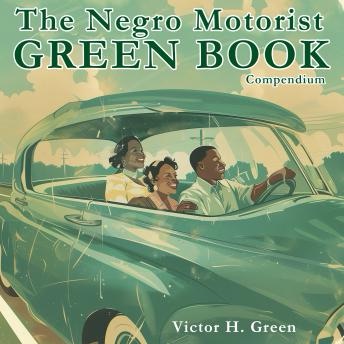
Origins: Victor Hugo Green and the Birth of the Guide
The story of The Green Book begins in Harlem, New York, with Victor Hugo Green, a Black postal worker. Green was born in 1892 in New York City and lived through the rise of the automobile as a new symbol of freedom in America. Yet for Black Americans, the automobile presented a bitter paradox: it offered the promise of mobility but exposed drivers and passengers to the full force of Jim Crow segregation once they ventured beyond familiar territory.
Inspired by Jewish travel guides that helped Jewish people avoid antisemitic establishments, and fueled by his own and his community’s experiences of discrimination, Green set out to create a resource that would make travel safer and more predictable for Black Americans. In 1936, using his network of postal workers and community contacts, he published the first edition of The Negro Motorist Green Book, focusing on the New York area.
The guide’s immediate success and the growing demand from Black travelers led Green to expand its scope. Within a few years, The Green Book was listing safe and welcoming establishments across every U.S. state and eventually in international destinations like Canada, Mexico, Bermuda, and the Caribbean. Green’s vision was clear and hopeful: “There will be a day sometime in the near future when this guide will not have to be published. That is when we as a race will have equal opportunities and privileges.”
Travel While Black: A Dangerous Necessity
To understand the significance of The Green Book, one must understand the perilous landscape it navigated. Jim Crow laws, primarily in the Southern states but with de facto equivalents in the North and West, enforced strict racial segregation in public facilities. African Americans were routinely denied service in restaurants, hotels, gas stations, and other establishments. More dangerously, they were at constant risk of harassment, arrest, or physical violence, particularly in “sundown towns”—municipalities that enforced policies prohibiting Black people from remaining within town limits after sunset.
Traveling Black families often devised elaborate survival strategies: they carried blankets and pillows to sleep in their cars rather than risk rejection at hotels, packed food to avoid hostile diners, and kept portable toilets because they were barred from most public restrooms. The act of driving, supposedly a great American freedom, became a tense, carefully orchestrated endeavor.
In this hostile environment, The Green Book offered much-needed reassurance. It told Black motorists where they could safely refuel, eat, sleep, and relax without fear. It listed not only Black-friendly businesses but also private homes that operated as informal lodgings, beauty parlors, nightclubs, and even tailors that welcomed Black patrons.
The Content and Structure of The Green Book
Each edition of The Green Book was a masterclass in community-sourced information and grassroots journalism. Green and his contributors compiled lists of hotels, motels, restaurants, gas stations, tourist homes, nightclubs, and other establishments that either welcomed Black customers or were Black-owned.
The listings were organized by state and then by city, allowing travelers to plan detailed routes with safety in mind. For example, an African American family driving from Chicago to New Orleans could map out each night’s stay using the guide, avoiding dangerous sundown towns and minimizing exposure to hostile encounters.
In addition to the listings, some editions featured travel articles, advice columns, and advertisements that reinforced the guide’s broader mission: supporting Black-owned businesses and building economic resilience within Black communities. Ads for insurance companies, automobile dealerships, beauty products, and financial services reflected the growing Black middle class and its aspiration for upward mobility despite systemic barriers.
Victor Green also included aspirational messages that highlighted Black achievement and encouraged readers to support one another. The guide functioned as much as a survival tool as it did a manifesto for Black dignity and self-determination.
Economic and Cultural Impact
The influence of The Green Book extended beyond mere logistics. It was deeply entwined with the burgeoning Black middle class and the rise of Black entrepreneurship in the 20th century. By spotlighting Black-owned hotels, diners, and services, the guide funneled economic power back into Black communities at a time when mainstream markets excluded them.
Hotels like the Hotel Theresa in Harlem (dubbed “the Waldorf of Harlem”) and the Dunbar Hotel in Los Angeles became legendary hubs not only for lodging but also for political organizing, entertainment, and cultural exchange. Celebrities such as Duke Ellington, Ella Fitzgerald, and Josephine Baker relied on The Green Book during their tours, as even famous Black entertainers were subject to the same discriminatory practices as everyday Black citizens.
On a broader level, the guide supported the right of Black Americans to claim full participation in the national pastime of road travel. At a time when highway expansion and car ownership symbolized American freedom and prosperity, The Green Book asserted that Black Americans, too, had a right to this mobility—even if they had to navigate a separate and unequal system to achieve it.
The Role of Route 66 and Other Iconic Roads
The Green Book was particularly significant along major American highways like Route 66, the “Main Street of America,” which stretched from Chicago to Los Angeles. While Route 66 symbolized opportunity and adventure for many white Americans, it was fraught with danger for Black travelers. Entire stretches of the highway passed through sundown towns, and some states were known for particularly hostile law enforcement.
Listings along Route 66 in The Green Book provided critical information that allowed Black families to travel the iconic road with some measure of safety. This democratization of travel turned the open road from a space of exclusion into one where Black Americans could carve out their own freedom of movement.
The Civil Rights Movement and the Decline of The Green Book
By the mid-1960s, America was undergoing a seismic transformation. The Civil Rights Movement had gained momentum, and landmark legal victories, including the Civil Rights Act of 1964, outlawed discrimination in public accommodations. Victor Green passed away in 1960, but his guide continued until 1966, when its final edition was published.
The very success of the civil rights struggle, which opened previously segregated hotels, restaurants, and other facilities to Black patrons, rendered The Green Book increasingly obsolete. No longer did Black travelers need to rely solely on segregated establishments for safety and service.
Yet, even as the guide faded from use, its legacy remained potent. It had empowered generations of Black Americans to travel, explore, and connect across a country that often sought to confine and endanger them. It had also helped to build and sustain a network of Black businesses that served as pillars of economic and social life in Black communities.
Legacy and Modern Rediscovery
In recent years, The Green Book has experienced a cultural renaissance. Museums, including the Smithsonian National Museum of African American History and Culture, have featured exhibits on the guide. Documentaries such as Driving While Black and popular films like the Oscar-winning Green Book (though criticized for historical inaccuracies) have brought renewed attention to its story.
Moreover, modern travel movements, such as the rise of Black travel blogs, mobile apps, and online communities, echo the spirit of Victor Green’s work. Platforms like Travel Noire and Nomadness Travel Tribe focus on creating safe and empowering travel experiences for Black travelers today, proving that the conversation The Green Book started is far from over.
Conclusion: A Testament to Black Resilience
The Negro Motorist Green Book stands as a powerful artifact of Black resistance, ingenuity, and solidarity. At its core, it was an act of radical defiance against a system that sought to limit Black mobility and dignity. By charting paths through a hostile landscape, it gave Black travelers not just routes and resources, but hope and confidence.
In an era when travel meant risk, The Green Book provided reassurance. In a world designed to exclude, it mapped out belonging. And today, as conversations about racial justice, safe spaces, and equitable access to freedom of movement continue, its lessons remain profoundly relevant.
Victor Hugo Green’s vision—that one day the guide would be unnecessary—remains aspirational. While much progress has been made, the enduring legacy of The Green Book reminds us that the struggle for true equality in all facets of life, including the simple act of going from place to place, is ongoing.
 The New Black Left
Leave a comment